
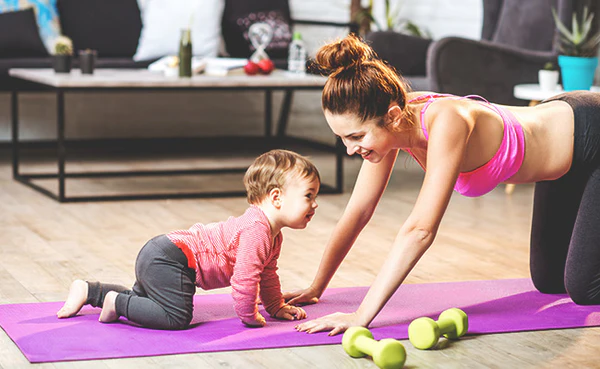
Many women quietly assume that once the intense baby phase passes, their body will eventually settle back into something that feels familiar again. Maybe not immediately, and perhaps not even within the first year, but eventually there is often this expectation that energy will return, strength will come back naturally, and the body will stop feeling so different.
And yet for a lot of mothers, that is not quite what happens.
Sometimes the feeling is obvious. Strength feels lower than before pregnancy, even years later. Sometimes it is more subtle than that. Daily life simply starts feeling heavier. Carrying a toddler on one hip while unloading groceries with the other arm suddenly feels exhausting. Sitting on the floor to play with the kids and standing back up again feels harder than expected. A long day of work, school pick-ups, bedtime routines, and trying to squeeze in a workout can leave someone feeling completely depleted in a way they never experienced before children.
Often the assumption is that this must be a personal failure somehow.
That perhaps more discipline is needed. More motivation. More effort. A stricter diet. Harder workouts.
Especially once the baby years are technically over, it can feel confusing when the body still does not fully feel like your own again.
But motherhood changes far more than the body during pregnancy itself. It changes recovery, sleep, stress levels, hormones, daily movement patterns, mental load, identity, and often the amount of physical and emotional capacity available for yourself for years afterwards.
And usually these changes do not happen all at once. They build slowly over time.
Motherhood Is Physically Demanding Long After the Postpartum Phase
One of the questions that comes up often is:
“How long is the postpartum phase actually supposed to last?”
At six weeks postpartum, women are often medically “cleared,” yet physically and emotionally many still feel very far from recovered. Some begin feeling mostly themselves again within the first year, while others notice lingering changes for much longer, especially after multiple pregnancies, difficult recoveries, years of broken sleep, high stress, or long periods of putting themselves last.
The truth is that there is no exact point where motherhood suddenly stops affecting the body.
Recovery is rarely a straight line where everything simply “goes back to normal.” Instead, motherhood tends to move through different seasons. The physical demands change as children grow, but they do not necessarily disappear. A mother may no longer be awake every two hours feeding a newborn, yet still wake lightly after years of interrupted sleep, carry constant mental load, rush through meals, juggle work and family schedules, and move through most days already mentally overstimulated before the morning has properly begun.
And this is often the part women are least prepared for.
Because technically no longer being postpartum does not always mean fully recovered.
So when energy still feels low, strength still feels reduced, or the body still feels unfamiliar years later, the immediate thought is often:
“What am I doing wrong?”
But often the body is responding exactly as a body would after years of accumulated stress, reduced recovery, hormonal shifts, inconsistent training, and constantly caring for other people before yourself.
Why Strength Often Feels Harder to Rebuild After Kids
Pregnancy, postpartum recovery, stress, interrupted sleep, and inconsistent training can all gradually reduce muscle mass and physical conditioning over time. Usually this happens so slowly that it is barely noticeable at first.
At the same time, motherhood itself is incredibly physical.
There are years of carrying babies in car seats, lifting toddlers into high chairs, pushing strollers in the heat, leaning forward breastfeeding, packing bags while half distracted, sitting awkwardly during bedtime routines, carrying children who insist they are “too tired to walk,” and constantly moving through life without much true recovery in between.
So it is not surprising that eventually the body may start feeling less supported.
Shoulders tighten.
Back discomfort creeps in.
Knees begin hurting.
Core strength feels reduced.
Energy drops more quickly.
The body feels less resilient than it once did.
And yet many women continue expecting themselves to function exactly as they did before children, despite the fact that their body has often been under-supported for years.
This is also where strength training can become incredibly valuable, not simply from an aesthetic perspective, but because rebuilding strength often helps daily life feel easier again. Carrying children feels less exhausting. Long days become more manageable. Women often start feeling steadier, stronger, and more physically supported in their own body again.
Not because exercise “fixes” motherhood, but because physical capacity genuinely matters.
The Nervous System Side of Motherhood
Something else that gets overlooked surprisingly often is the effect long-term stress and mental load can have on the body.
Physical fatigue is only part of the picture.
There is also the constant mental “on-ness” that comes with motherhood. Remembering appointments. Planning meals while replying to work messages. Mentally organising everyone else’s schedules before even considering your own needs. Constantly anticipating what is next.
Even mothers who deeply love this phase of life can still find themselves operating in a nervous system state that rarely fully settles.
And that influences far more than people realise.
Recovery from exercise may feel slower.
Motivation fluctuates more.
Pain sensitivity can increase.
Sleep quality suffers even when children technically sleep through the night.
Cravings and hunger patterns may shift.
Sometimes women wake up already feeling behind before the day has properly started.
This is also one reason why extreme fitness approaches often do not work particularly well for overwhelmed mothers. More intensity is not always the answer when the body is already operating close to its limit physically and mentally.
When the Body Still Feels Different Years Later
For some mothers, the core still feels disconnected long after pregnancy, even if they have technically “recovered.”
The body may feel less stable.
Back discomfort lingers.
Leaking still happens occasionally.
Certain exercises feel uncomfortable.
Running may not feel the same.
Or there is simply the quiet feeling that the body no longer moves quite the way it once did.
That does not automatically mean something is seriously wrong, nor does it mean women should fear movement or exercise altogether. But it does often mean the body benefits from rebuilding strength gradually instead of jumping straight back into very intense or high-impact training without enough support underneath it.
Unfortunately fitness culture tends to swing between extremes. Women are either told their body is “damaged” and fragile, or they are encouraged to push hard and bounce back as quickly as possible.
Most mothers need something much more balanced than either of those approaches.
Usually the body responds better to progressive strength work, realistic expectations, supportive guidance, proper recovery, and enough patience to slowly rebuild capacity over time.
The Pressure to “Bounce Back”
Modern motherhood places enormous pressure on women physically and emotionally.
Recover quickly.
Return to work quickly.
Stay fit.
Look healthy.
Be productive.
Be present.
Care for everyone else.
Keep training consistently.
Do not lose yourself.
But also somehow continue functioning as though recovery, stress, hormones, sleep deprivation, and mental load are not affecting the body at all.
At the same time, genuine support for rebuilding strength realistically is often surprisingly limited.
So many mothers quietly end up blaming themselves for struggling in bodies that have simply been under-recovered, under-supported, and overstretched for years.
But struggling does not mean failing.
And needing to rebuild does not mean weakness.
What Actually Helps
One of the hardest parts about this phase of life is that progress often looks slower and less dramatic than expected.
Someone may genuinely be trying hard. Strength training consistently. Walking daily. Trying to eat better. Fitting workouts around childcare and work schedules. And still feel discouraged that the body is not changing faster.
I see this often around the one-year postpartum stage. On paper, things may look relatively consistent. Two strength sessions a week. Daily walking. Trying to improve nutrition. But underneath the surface recovery is still fragmented. Sleep remains broken. Stress stays high. One week training goes well, the next week routines collapse because a child gets sick or life simply becomes overwhelming again.
And despite that, progress is often still happening quietly underneath.
Strength improves before body composition changes.
Pain reduces gradually.
Energy improves slowly.
Confidence returns in small pieces first.
Hormonal changes can also continue influencing the body far longer than people expect.
Some mothers are still breastfeeding well into the first or second year postpartum, while others are navigating weaning, fluctuating hormones, or the return of their menstrual cycle. Hunger, recovery, mood, cravings, and energy can all shift during this time.
Breastfeeding itself increases energy demands significantly, while sleep deprivation can affect appetite regulation, recovery, stress levels, and food choices in ways that are easy to underestimate.
Sometimes women quietly begin eating less because they feel frustrated that the scale is not moving and hope stricter dieting will finally help. Others may unintentionally eat more than they realise simply because exhaustion, stress, rushed meals, and broken sleep make hunger much harder to regulate.
And often all of this is happening while expecting the body to recover, build muscle, lose fat, stay energised, and perform well at the same time.
The postpartum phase is rarely as simple as:
“eat less and exercise more.”
Usually the body needs far more support and consistency than punishment.
That does not mean intensity is always wrong. Sometimes women eventually do feel ready for more challenging training again, and progressing intensity can absolutely be appropriate. But usually the foundation matters most first:
- consistent strength training
- enough recovery
- realistic expectations
- adequate nourishment
- walking and general movement
- rebuilding muscle gradually
- working with the season of life instead of constantly fighting against it
And sometimes part of the process is learning to recognise progress the scale does not immediately show.
Feeling physically stronger.
Having less pain.
Getting through busy days more easily.
Feeling steadier carrying children.
Feeling more confident moving again.
Those changes matter too.
Especially in motherhood, rebuilding strength is often less about chasing perfection and more about slowly creating a body that feels supported, capable, and resilient again.
Final Thoughts
If your body still feels weaker or unfamiliar years after having children, you are certainly not alone.
Motherhood changes the body, but it also changes recovery, hormones, stress levels, priorities, nervous system load, and the amount of capacity available for yourself. It is very easy to spend years caring for everyone around you while slowly becoming disconnected from your own physical needs in the process.
Rebuilding strength is not about proving something or trying to “earn back” your old body.
Often it is simply about feeling supported in your own life again.
And that process is allowed to take time.
If you are trying to rebuild strength after pregnancy or motherhood and feel unsure where to start, you are not alone.
At ActiveWomenSG.com, I work with women through pregnancy, postpartum, motherhood, and beyond with realistic strength coaching that supports real life, recovery, and long-term health — not quick fixes or extreme approaches.
Whether you are newly postpartum, years into motherhood, rebuilding after a difficult season, or simply wanting to feel stronger and more supported in your body again, the goal is to help women train in a way that feels sustainable, realistic, and supportive for the season they are in.
Leave a Reply