
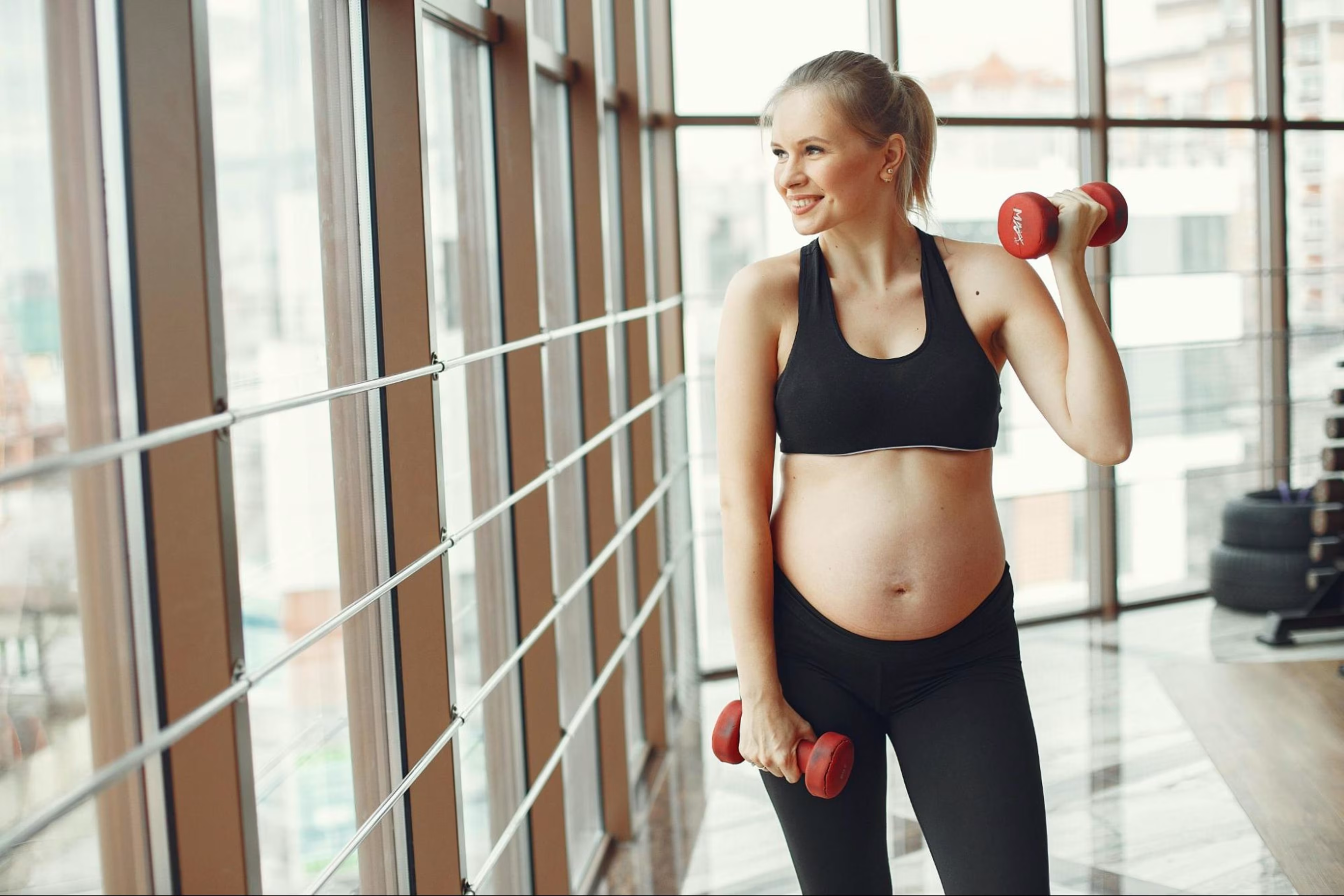
Everyone told me to “just listen to my body.”
But my body was exhausted, confused, and growing an entire human being. Some days it told me to lie on the sofa and not move until further notice. Other days it felt surprisingly okay — and I had absolutely no idea if training was safe, what I should modify, or whether the fact that I could still squat meant I should.
The advice out there didn’t help much either. Either it was so cautious it felt like I should wrap myself in cotton wool for nine months, or it was aggressively “strong mamas lift!” with no real guidance on how.
What I actually needed was someone to tell me the truth: pregnancy training is not one-size-fits-all, it changes every trimester, and the goal isn’t performance — it’s preparation.
Here’s what I wish I’d known.
First, let’s talk about why it matters
Strength training during pregnancy isn’t about keeping your pre-baby body or hitting PRs. It’s about:
- Supporting a body that’s working incredibly hard. Your posture shifts, your centre of gravity moves, your joints loosen, your blood volume increases by up to 50%. Strength training helps your body cope with all of that.
- Preparing for birth. Labour is physical. Having functional strength, body awareness, and breath connection genuinely helps.
- Making postpartum easier. The women who maintain some level of training through pregnancy tend to have an easier time coming back to it — not because they “bounced back” (ugh, that phrase), but because their baseline was higher and their recovery was smoother.
- Mental wellbeing. Pregnancy can be beautiful and it can also be hard, anxious, and uncomfortable. Moving your body — even gently — is one of the most reliable tools you have.
None of this means you need to train like an athlete. It means that moving intentionally through pregnancy is worth it, and there are ways to do it safely at every stage.
What changes — and when
First trimester (weeks 1–12): Survive first, train second
This is the trimester nobody talks about honestly. You may feel exhausted in a way that’s hard to explain to anyone who hasn’t experienced it. Nausea can hit at any time of day. Your body is doing the most — forming a placenta, doubling your blood supply, building an entirely new organ — and most of it is invisible.
What training looks like here:
If you feel okay, you can largely continue what you were doing before — with some adjustments. This isn’t the time to start a new aggressive programme, but it’s also not the time to stop moving entirely.
- Keep intensity moderate. You should be able to hold a conversation.
- Avoid exercises that feel uncomfortable in your core or cause any kind of pressure or pulling sensation.
- Start tuning in to your pelvic floor — this is a good time to begin intentional breath and connection work.
- If some days all you can manage is a walk, that counts. It really does.
The honest bit: Some days you will do nothing, and that is fine. First trimester fatigue is not laziness. It’s your body telling you something important. Listen.
Second trimester (weeks 13–26): The training sweet spot
For many women, energy returns in the second trimester and this is when training can feel genuinely good again. Your bump is visible but not yet limiting. This is often the phase where thoughtful, consistent training is most accessible.
What training looks like here:
- Strength training 2–3 times per week is realistic and beneficial for most women.
- You’ll start modifying exercises as your bump grows — this is normal, not a failure.
- Avoid lying flat on your back for extended periods (especially from around 20 weeks), as the weight of the uterus can compress a major blood vessel.
- Focus on compound movements: squats, hinges, rows, presses — all still highly doable with modifications.
- Your core work shifts. Traditional crunches and sit-ups are out; deep core and pelvic floor connection is in.
- Pay attention to any coning or doming along your midline when you exert effort — this is your body’s signal to modify.
This trimester is also a great time to start focused birth preparation work. Hip mobility, pelvic floor release, and learning to breathe with your body rather than bracing against it can make a real difference come labour day.
→ I’ve put together a free Birth Prep Guide covering exactly this — pelvic floor release, hip mobility, birth breathing, and gentle strength from 32 weeks. Download it here.
Third trimester (weeks 27–40): Slow down, stay connected
This is where your body starts genuinely limiting what’s comfortable — and that’s okay. The goal shifts from building strength to maintaining it, keeping mobile, and preparing physically and mentally for birth.
What training looks like here:
- Reduce intensity and volume. You are not losing fitness — you are growing a person in your final stretch.
- Many women find upper body work stays comfortable longest. Seated or supported exercises become your friends.
- Walking is genuinely excellent training at this stage. Don’t underestimate it.
- Continue pelvic floor and breath work — this is more important than ever.
- Some days you’ll feel great; others, you won’t. Both are valid. There’s no gold star for pushing through when your body is telling you to rest.
The single most useful thing you can do in the third trimester isn’t a specific exercise — it’s learning to connect your breath to your movement, to release your pelvic floor rather than always contracting it, and to understand what your body is doing. That knowledge carries you through birth and into postpartum.
What to watch for
Pregnancy training is generally very safe — but there are signals that mean stop and check in with your healthcare provider:
- Any pain (especially in your pelvis, hips, or pubic area)
- Dizziness or feeling faint
- Shortness of breath beyond normal exertion
- Any bleeding or unusual discharge
- Coning or doming in your midline that doesn’t resolve with modification
- Feeling of pressure or heaviness in your pelvis
If in doubt, check it out. A good pelvic floor physiotherapist during pregnancy is one of the best investments you can make.
The bigger picture
Strength training through pregnancy isn’t about what you look like or what you can lift. It’s about building a body that’s prepared — for birth, for the fourth trimester, for the long game of motherhood.
Real life is messy. Some weeks you’ll train three times. Some weeks you’ll manage one walk around the block. Both of those are enough, because what matters is staying connected to your body through a season that asks an enormous amount of it.
You don’t have to have it all figured out. You just have to keep showing up — however that looks right now.
Ready to prepare your body for birth?
My free Birth Prep Guide covers the exercises that actually matter from 32 weeks: pelvic floor release, hip mobility, birth breathing, and gentle strength. Evidence-based, written from personal experience.
→ Get the free Birth Prep Guide
If you want to go deeper into trimester-by-trimester strength training — with actual sets, reps, modifications, and sample weeks — that’s exactly what my book covers.
Strength Through the Messy & Beyond — Real-Life Strength Training for Pregnancy, Postpartum & Perimenopause is written for women who want to keep training through the real, unpredictable, beautiful mess of life’s biggest transitions.
→ Find out more about the book
Daniëlle van der Leest is a Women’s Strength & Wellbeing Coach, Founder of ActiveWomen, and Mum of 3. She specialises in strength training for women through pregnancy, postpartum, and perimenopause.
Leave a Reply