
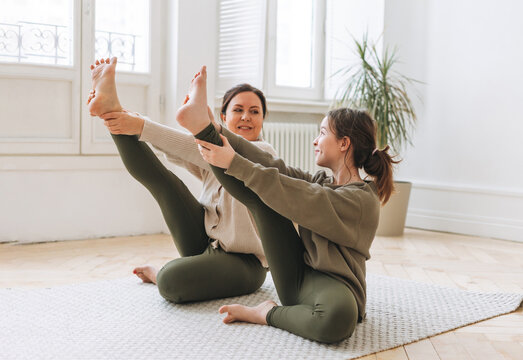
Recently I started coaching a mum who came to me for one reason: perimenopause. She’d noticed changes in her body, her energy and her strength, and she knew resistance training was something she needed.
What I didn’t expect was that her teenage daughter would join the sessions too. It turned into lovely bonus quality time for the two of them. And within the first ten minutes of our very first session, something stood out: both of them showed clear signs of hypermobility. After years of coaching women’s bodies through every life stage, it’s the kind of thing you learn to spot quickly.
Knees that bent a little too far backwards when standing. Elbows that extended past straight. Movements that went deep and easily, but without much control at the end of the range.
Her daughter loves yoga and stretching. Of course she does! It comes easily to her, it feels good, and she’s naturally great at it. But that’s exactly the point. What comes easily isn’t always what your body needs most.
When flexibility isn’t the whole story
If you’re very flexible, stretching can feel like your “thing”. But for hypermobile bodies, flexibility usually isn’t the problem. Stability is.
When joints move further than average, the muscles around them need to work harder to keep things controlled and safe. Without that strength, the joints take more strain, which can lead to aches, niggles and a higher risk of injury over time.
That’s why, for both mum and daughter, the answer wasn’t to stop yoga. It was to add resistance training, adjusted to their bodies. For hypermobile clients that means things like:
- Working in a controlled range rather than pushing to the end of it
- Slower tempos so muscles, not ligaments, do the work
- Avoiding locking out knees and elbows
- Building strength around key joints: hips, knees, shoulders
- Adding balance and body-awareness work
(If you suspect you’re hypermobile, it’s worth having it assessed by a physio or doctor, who can guide what’s right for you.)
The bigger lesson: variety beats specialising
This session made me think about a shift we’ve seen in sports research for kids. Experts, including the American Academy of Pediatrics, now recommend children try a range of sports and delay specialising in just one until their mid-teens.
Why? Repeating the same movements over and over increases the risk of overuse injuries and burnout. Kids who move in lots of different ways build more all-round, resilient bodies.
The same is true for adults. Your body adapts to what you ask of it, and nothing more. If you only do yoga, or only run, or only play one sport, there will be gaps.
Why this matters even more from your 30s
From around age 30, we slowly start losing muscle mass unless we actively train to keep it. Then perimenopause, which often begins in the early-to-mid 40s (sometimes late 30s), speeds up both muscle and bone loss as oestrogen drops.
That’s exactly why my client came to me. Strength training helps to maintain muscle and metabolism, support bone density, stabilise joints, and improve mood, sleep and energy through hormonal change.
The Singapore Physical Activity Guidelines recommend muscle-strengthening activity on at least two days a week. Yoga alone rarely covers that.
What a balanced week can look like
- 2 strength sessions: squats, hinges, pushes, pulls, carries, adapted to your body
- 1 yoga or mobility session for movement quality and recovery
- 1 cardio-based session: boxing, a brisk walk, swimming or your favourite sport
Keep doing what you love. Just add what’s missing around it.
How ActiveWomen can help
At ActiveWomen, we coach women (and their kids) in Singapore with programmes built around real bodies and real life. We offer:
- Strength training for every life stage, including pregnancy, postpartum and perimenopause
- 1:1 yoga to complement your strength work
- Boxing for fitness, coordination and stress relief
- Sport-specific training to prepare for a race, a season or a new sport
- Return from injury support to rebuild strength and confidence
- Mum and kid sessions, so you can train together, just like the mum and daughter who inspired this post
We train at Core Collective in Dempsey, i12 Katong and Tanjong Pagar, offer home visits across Singapore, and coach online worldwide.
Want a routine that fits your body? Book a free call with us and we’ll talk through your goals, your body and what would work best for you.
FAQ
Is yoga enough exercise for women over 35?
Yoga supports flexibility and wellbeing, but most women over 35 also need progressive strength training to protect muscle and bone.
Should hypermobile people do strength training?
Generally yes. Strength training helps stabilise joints, as long as it’s adapted: controlled ranges, good technique and no locking out.
Can teenagers do strength training?
Yes. With proper coaching and age-appropriate loads, strength training is safe and beneficial for teens.
Can mums and kids train together at ActiveWomen?
Yes, we offer shared sessions for parents and children at our studios and during home visits.
Leave a Reply